
What Are the Top Pan Tilt Unit Types in 2026?

Time:2026-11-05 Author:Sophia
0%

In 2026, choosing a Pan Tilt Unit is less about buying the largest mechanism and more about matching movement to the job. A rooftop security camera may need weather sealing and steady rotation. A compact inspection system may need precise, repeatable positioning instead. Small details count.

The broader market is expanding. MarketsandMarkets’ Video Surveillance Market forecast estimated growth from USD 53.7 billion in 2023 to USD 83.3 billion by 2028, a 9.2% compound annual growth rate. That forecast covers video surveillance, not Pan Tilt Unit sales specifically. Still, it signals rising demand for camera systems that can cover wider areas and support remote operation. It does not prove every site needs a motorized mount.

This guide compares the main unit types buyers are likely to encounter: compact indoor models, rugged outdoor units, high-speed systems, precision positioning units, and heavy-duty platforms. Each serves a different balance of payload, speed, accuracy, environmental protection, and control compatibility. A fast unit can be the wrong choice if it shakes under a long lens. A rugged unit can be excessive indoors. Check stated payload limits, operating temperatures, rotation range, and test conditions; product specifications are not always directly comparable. Honestly, there is no universal “top” unit. The useful choice depends on the camera, installation, and task—and those details are easy to underestimate.
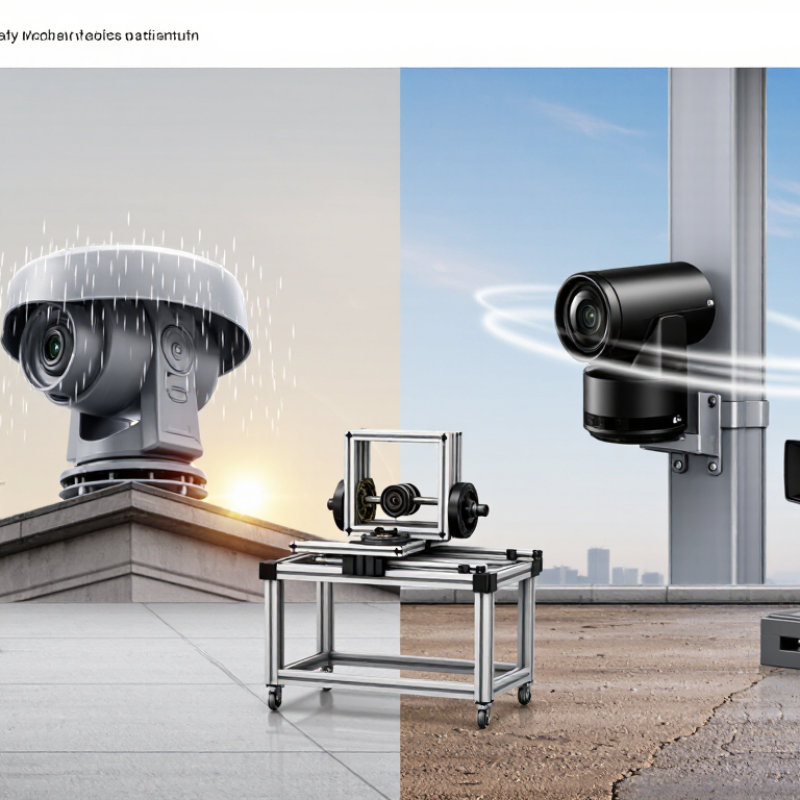
What Are the Top Pan Tilt Unit Types in 2026?

What a Pan Tilt Unit Does and How It Is Classified

A pan tilt unit (PTU) turns a camera or sensor horizontally and vertically. Pan controls side-to-side movement; tilt changes the viewing angle. Together, these axes help operators follow activity, inspect wide areas, or aim at a fixed point. A PTU is more than a moving mount. Its motor, gears, controls, and position feedback affect how smoothly and accurately it works. Small shakes can blur a distant image.

In 2026, PTUs are commonly classified by drive design, payload, speed, and operating environment. Direct-drive units can move smoothly and reduce mechanical backlash, while geared units often suit heavier loads or more demanding torque needs. Some models prioritize fast repositioning; others favor precise, repeatable movement. Compact units fit lightweight cameras, while rugged outdoor units may include weather-resistant housings. These categories overlap, so a “high-speed” unit is not automatically the best choice. Real installations can reveal trade-offs that a specification sheet misses.

Tips: Check the combined weight of the camera, lens, and cables. Confirm the required rotation range and mounting orientation. Test movement at the actual viewing distance, if possible. A small mismatch matters. Leave room for cable travel, and verify that the control system supports the commands your setup needs.

Which Pan Tilt Unit Types Stand Out in 2026?

Which Pan Tilt Unit Types Stand Out in 2026?

Motorized pan-tilt units stand out where operators need repeatable, remote aiming. Compact units suit indoor inspection and conferencing, while weather-sealed, ruggedized models fit exposed sites. For long lenses or heavy sensors, high-payload units matter more than speed alone. Check rated load, backlash, rotation range, and cable routing against the actual camera setup.

MarketsandMarkets estimated the global video surveillance market at $53.7 billion in 2023, projecting $83.3 billion by 2028. This is a broad market forecast, not a pan-tilt-unit sales figure, but it signals demand for flexible camera systems. In practice, integrated PTZ assemblies can simplify installation; separate precision units offer more choice in payloads and sensors. Neither is automatically better. I’d still test tracking stability at the intended zoom level, because small shakes become obvious on screen.

Tips: Confirm the unit’s payload includes the lens, housing, and cables. Test movement with the real equipment installed. A datasheet won’t reveal every vibration issue.

What Are the Top Pan-Tilt Unit Types in 2026?

A qualitative comparison of common pan-tilt unit types by their typical design priorities.

Scores show relative design emphasis on a 1–5 scale, not measured performance or market share. Actual capabilities vary by model and application.

How Compact, High-Speed, and Heavy-Duty PTUs Differ

What Are the Top Pan Tilt Unit Types in 2026?
How Compact, High-Speed, and Heavy-Duty PTUs Differ

Compact PTUs suit installations where space and weight are limited. They can sit on a small mast, vehicle, or inspection platform. Their lower payload capacity makes them a practical match for lightweight cameras and sensors. Check the full mounted load, including cables and brackets, not just the camera’s listed weight. Small units still need rigid supports.

High-speed PTUs prioritize rapid movement and quick repositioning. They are useful when a sensor must track moving subjects or scan across a wide area. Look beyond peak speed: acceleration, settling time, and control smoothness affect what the image actually captures. Fast is not always steady. In a test, watch for vibration after each sharp change in direction.

Heavy-duty PTUs are designed to move larger payloads, often in exposed or demanding environments. Their stronger frames and drive systems can support heavier optics, but they also add mass and may draw more power. Match the unit to the payload’s center of gravity and expected operating conditions. One detail is easy to overlook: a PTU that handles the weight on paper may still struggle with wind load or an off-center mount. Compare rated limits with the real installation, and leave room for uncertainty.

What Makes Outdoor and Marine PTUs Distinct?

Outdoor and marine pan tilt units share a basic job, but their exposure differs sharply. Outdoor PTUs face rain, dust, sunlight, and changing temperatures. Marine units also encounter persistent salt deposits, spray, and corrosion risks around fasteners and cable entries. Salt finds gaps.

NOAA’s National Ocean Service reports average ocean salinity of about 35 parts per thousand. That gives marine designers a clear reason to prioritize corrosion-resistant materials, sealed connectors, and protected joints. IEC 60529 defines ingress-protection ratings: IP66 covers powerful water jets, while IP67 covers temporary immersion. Neither rating alone confirms resistance to salt corrosion, ultraviolet exposure, or long-term vibration.

The practical distinction appears during maintenance. An outdoor unit may need a weather hood and routine seal checks; a marine unit often needs compatible metals and more frequent inspection of exposed fittings. A design can be overbuilt in one area and still fail at a connector. I would check the installation environment, not just the IP number, before choosing a PTU. The standards describe useful test conditions, but real exposure varies with mounting position, cleaning, and spray patterns.

What Are the Top Pan Tilt Unit Types in 2026? - What Makes Outdoor and Marine PTUs Distinct?

Comparison dimension Indoor PTU Outdoor PTU Marine PTU Heavy-Duty / Industrial PTU
Typical setting Control rooms, studios, laboratories, and other sheltered locations. Building exteriors, traffic sites, perimeter monitoring, and exposed land-based installations. Vessel decks, masts, offshore platforms, and other marine topside locations. Industrial sites where payload, operating duty, or mechanical loads are higher than typical applications.
Environmental exposure Generally protected from rain, salt spray, and direct weather. Designed to address conditions such as rain, dust, wind, and temperature variation. Must account for salt spray, high humidity, vibration, and potentially severe weather at sea. Depends on the installation; may need protection from dust, moisture, vibration, or process-area conditions.
Enclosure and ingress protection Often uses a housing suited to a controlled indoor environment; weather sealing may be unnecessary. Check the specified IP rating and its test conditions. For example, IP66 indicates dust-tight protection and protection against powerful water jets. Verify the stated ingress rating and installation limits. A marine designation alone does not mean the unit is suitable for submersion. Selected according to site hazards; enclosure protection is separate from mechanical load capacity.
Corrosion protection Usually standard finishes are adequate in clean, dry spaces. Weather-resistant finishes and protected connectors help limit deterioration outdoors. Salt exposure calls for corrosion-resistant materials or coatings, careful fastener selection, and attention to dissimilar-metal contact. Material and coating choices depend on industrial contaminants, cleaning methods, and the surrounding environment.
Motion and stabilization Typically prioritizes smooth, accurate positioning for observation or imaging. May need to maintain pointing accuracy despite wind and changing outdoor conditions. May need to handle vessel motion and vibration; stabilization capability should be confirmed rather than assumed. Often emphasizes payload support, torque, stiffness, and repeatable movement under demanding duty cycles.
Mounting and cabling Mounting is usually straightforward, with cables routed in a relatively protected space. Mounts and cable entries should resist weather exposure and be installed according to the enclosure requirements. Mounting must suit the vessel structure and operating environment; cable routing and connectors need protection from moisture and salt. Mounting structure, cable management, and access for maintenance should account for equipment loads and site layout.
Common selection priorities Positioning accuracy, quiet operation, control compatibility, and compact installation. Ingress protection, temperature limits, wind loading, corrosion resistance, and service access. Salt-spray resistance, vibration tolerance, mounting suitability, sealing, and clearly defined operating limits. Payload and moment capacity, duty cycle, rigidity, environmental requirements, and maintenance needs.
Key distinction Optimized for a relatively controlled environment. Weather protection is a central design consideration, but requirements vary by site. Combines environmental protection with additional attention to salt corrosion, vessel conditions, and marine installation details. Distinguished primarily by mechanical demands and operating duty, not by one universal enclosure or application.

Selection note: Ratings and capabilities vary by unit. Confirm the manufacturer’s documented IP test conditions, temperature range, corrosion protection, load limits, and whether the equipment is intended for topside use or submersion before specifying a PTU.

How to Choose a PTU Type for a Specific Application

Choosing a pan tilt unit starts with the job, not the biggest payload number. A compact geared PTU suits a light camera scanning a small indoor area. For a long lens or thermal sensor on a rooftop, a high-payload, weather-sealed model may handle wind and exposure better. Direct-drive units can offer smooth movement and low backlash, while geared designs often trade some precision for greater torque. Check total payload, centre of gravity, movement speed, repeatability, duty cycle, and cable routing. Small details matter. A stiff cable can pull against the head and spoil a slow pan.

The application mix keeps expanding: the International Federation of Robotics’ World Robotics 2024 report counted 4,281,585 industrial robots operating worldwide in 2023, with 541,302 installed that year. This is not a PTU sales forecast, but it shows how widely automated equipment is used. In inspection cells, prioritize repeatable positioning and integration with sensors. For mobile platforms, weigh low mass, vibration resistance, and power draw. Outdoor observation needs corrosion protection, a suitable ingress rating, and enough torque for the actual wind load—not just a calm-day demonstration.

Test the intended sensor and cable set together. A bench test may miss vibration, cold-start drag, or a slightly off-centre lens. I would leave margin in torque and payload calculations, then verify tracking speed on site. Specifications help. Reality argues back.

FAQS

What does a pan tilt unit do?

It moves a camera or sensor horizontally and vertically. Pan moves side to side; tilt changes the viewing angle.

What affects a unit’s movement accuracy?

Motors, gears, controls, and position feedback all matter. Even small shakes can blur a distant image.

How do direct-drive and geared units differ?

Direct-drive units can move smoothly with little mechanical backlash. Geared units often provide more torque for heavier loads.

What should I check before choosing a unit?

Check the combined weight of the camera, lens, and cables. Also consider speed, repeatability, duty cycle, and mounting orientation.

How do outdoor and marine units differ?

Outdoor units face rain, dust, sunlight, and temperature changes. Marine units also face salt spray and corrosion around joints.

Does a water-resistance rating guarantee marine durability?

No. A rating describes specific water exposure, not salt corrosion, sunlight, or long-term vibration. Salt finds gaps.

Why does cable routing matter?

A stiff cable can pull against the unit and spoil a slow pan. Leave room for cable movement.

How can I check whether a unit suits my setup?

Test it with the actual sensor and cables. A bench test may miss wind, cold-start drag, or an off-centre lens. I would leave some margin.

Conclusion

A Pan Tilt Unit (PTU) moves a mounted camera or sensor horizontally and vertically, allowing it to cover a wider area or track activity. PTUs can be classified by size, speed, load capacity, and operating environment. In 2026, key types include compact units for space-constrained installations, high-speed models for rapid movement, and heavy-duty units designed to carry larger payloads with stability. Each type balances different priorities, such as precision, range of motion, speed, and strength.

Outdoor and marine PTUs are built to handle exposure to moisture, temperature changes, vibration, or salt air, so their protective construction and materials are important selection factors. Choosing the right PTU starts with defining the application: consider the payload’s weight and dimensions, required movement speed and accuracy, available installation space, and environmental conditions. Matching these needs to the unit’s capabilities helps ensure reliable operation without selecting more capacity or complexity than the task requires.

Sophia

Sophia

Sophia is a dedicated marketing professional with an exceptional depth of knowledge about her company's products and services. With a keen understanding of market trends and customer needs, she crafts insightful blog posts that not only inform but also engage readers, enriching the company’s online......