
How to Choose the Best Yagi Rotator for Global Buyers?

Time:2026-09-23 Author:Madeline
0%

Choosing the right Yagi Rotator can determine whether a directional antenna tracks signals accurately or struggles in changing weather. Global buyers face different climates, tower designs, shipping conditions, and installation standards. A rotator suited to a dry rooftop may fail on a coastal mast with salt exposure. Small details matter.

This guide examines practical factors, including turning range, maximum antenna load, wind resistance, brake strength, control accuracy, and power compatibility. Experienced installers often check the rotator’s torque rating against the antenna’s boom length and projected wind area. Manufacturer manuals should support every performance claim. A smooth motor is useful, but dependable limit switches and clear position feedback matter more during long-term operation.

Regional conditions also deserve careful attention. Buyers should confirm voltage requirements, connector types, spare-part access, warranty coverage, and local frequency regulations. Reliable suppliers provide test data, installation instructions, and realistic environmental ratings. Marketing language alone is not enough. Field experience can expose weaknesses that product pages overlook, especially loose bearings, noisy gears, or inaccurate calibration after repeated movement. No selection method is flawless. Even a premium Yagi Rotator may need stronger mounting hardware or weather protection. Comparing verified specifications with the actual site conditions helps global users choose equipment that remains stable, serviceable, and legally appropriate across different operating environments.
How to Choose the Best Yagi Rotator for Global Buyers?

What a Yagi Rotator Is and How It Supports Directional Antennas

How to Choose the Best Yagi Rotator for Global Buyers?

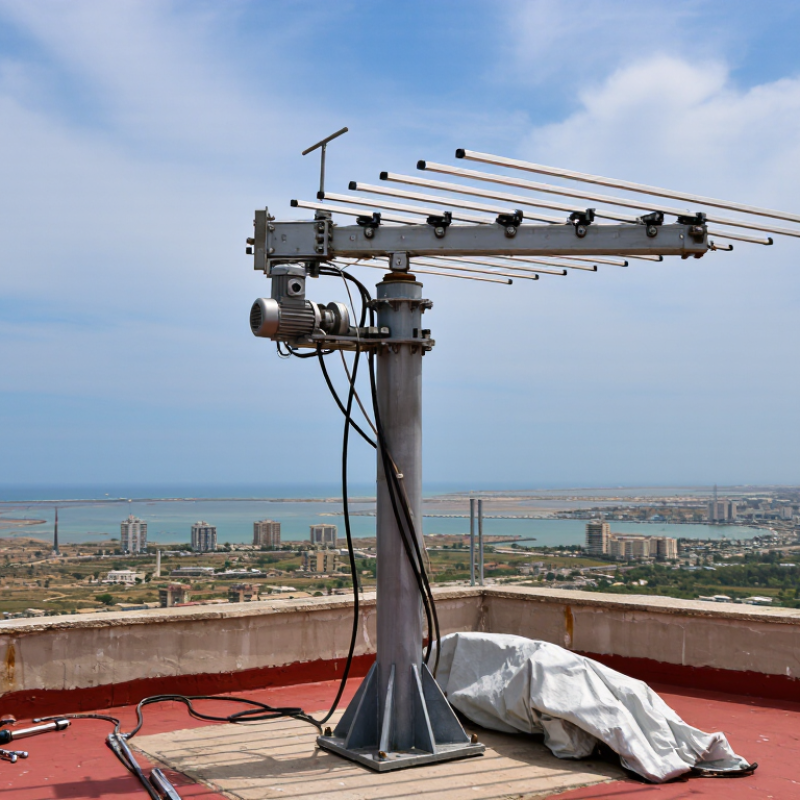
A Yagi rotator turns a directional antenna across the horizon. It helps align the antenna with distant signals, satellites, or changing communication paths. Unlike an omnidirectional antenna, a Yagi concentrates energy toward one azimuth. The ARRL Antenna Book reports typical Yagi gains of about 6–12 dBi, depending on element design and spacing. That gain is useful, but only when the antenna points accurately.

A rotator should match antenna boom length, wind load, mast diameter, and operating frequency. ITU-R Recommendation BS.705-1 highlights how directional antenna performance changes with azimuth and elevation. Even a small pointing error can reduce usable signal strength. A 3 dB loss means roughly half the received power. Field installers often prefer models with position feedback, adjustable rotation limits, and a slow-start motor. Mechanical backlash matters too. A neat specification sheet cannot show every real-world weakness.

Tips: Check the antenna’s projected wind area, not only its weight. Choose an enclosure rated for local rain, dust, and temperature conditions under IEC 60529 guidance. Confirm controller voltage before shipping internationally. Test the rotator at ground level first. It may reveal cable twisting, noisy gears, or an incorrect direction scale. No rotator lasts forever in coastal air. Regular inspection remains necessary.

Representative Wavelengths for Common Yagi Operating Bands

A Yagi rotator turns a directional antenna toward the desired bearing. Lower-frequency Yagis generally have longer physical elements and may require greater mechanical support, while higher-frequency antennas are usually more compact. The wavelengths below are calculated from the representative band frequencies using λ = c ÷ f.

Values are representative calculations based on the speed of light (approximately 299,792,458 m/s). Actual Yagi dimensions vary with design, element spacing, boom length, materials, and operating bandwidth. When choosing a rotator, compare antenna weight, wind load, mast diameter, braking capability, and required azimuth range with the rotator’s specifications.

Key Specifications for Comparing Yagi Rotator Performance

How to Choose the Best Yagi Rotator for Global Buyers?

Key Specifications for Comparing Yagi Rotator Performance

A strong Yagi rotator must match the antenna’s size, weight, and wind exposure. Check rated turning torque, not only the maximum antenna weight. A long boom creates leverage during gusts. This can overload a small drive system quickly. Look for a suitable wind-load rating and a mechanical brake. The brake should hold the antenna securely when power is removed. Rotation speed also matters. Fast movement helps during signal tracking, but smooth control is more important for weak-signal work.

Position accuracy, backlash, and stopping repeatability reveal real performance. A rotator may advertise wide rotation, yet poor feedback can cause pointing errors. Compare the control resolution with your operating needs. For rooftop installations, inspect weather sealing, corrosion resistance, and operating temperature. Global buyers should also verify input voltage, frequency, connector types, and local electrical certification. These details are easy to overlook. They can delay installation or create unsafe modifications.

Tips: Measure the antenna’s projected wind area before choosing a rotator. Add a safety margin for ice, rain, and unexpected gusts. Test the control cable length and voltage drop on the ground. Confirm whether spare parts and technical support are available in your region. No rotator is perfect. I would rather choose slower movement with less backlash than impressive speed with uncertain positioning. Manufacturers’ ratings may use ideal conditions, so compare them carefully with your actual mast height and climate.

How to Match Rotator Capacity with Antenna Size and Installation

Choosing a Yagi rotator starts with wind load, not antenna weight alone. A lightweight antenna with a long boom can create serious torque. Measure projected area, boom length, mast height, and expected wind speed. Then check the rotator’s rated torque and allowable bending moment under comparable conditions. A catalog capacity can mislead when it assumes calm weather. Leave a practical reserve for gusts, ice, and aging hardware. Do not treat the maximum rating as a working target. Allow margin.

Installation changes the calculation. A rotator mounted above a thrust bearing may carry less vertical load, while a lower mount may transfer more bending stress into the unit. Confirm mast diameter, clamp geometry, and shaft compatibility before ordering. Keep the antenna balanced around the rotation axis. Even a small offset can increase startup torque. Provide a flexible cable loop with enough slack for the full rotation range. Check for snags after several slow turns. This detail is easy to miss.

For coastal, tropical, or high-altitude sites, specify corrosion protection, sealing, temperature range, and service access. Frequent directional changes also require a suitable duty cycle and low backlash. Ask for test conditions behind every capacity number. If the supplier cannot explain them, compare another model. Field conditions remain untidy. Wind maps and installation drawings may not reflect sudden local turbulence. A site inspection or structural review is worth the extra time, especially when the antenna sits on a tall mast.

Global Factors: Voltage, Weather Resistance, Standards, and Support

Choosing a Yagi rotator for global use starts with voltage, not rotation speed. Check the local supply carefully: 100–127 V and 220–240 V systems are common across markets, with 50 or 60 Hz frequencies. A rotator rated for the wrong input may overheat or fail early. IEC 60038 provides standardized supply-voltage references, but local installation practice still matters. Confirm motor voltage, controller input, frequency, plug type, and surge protection before ordering.

Weather resistance deserves equal attention. The World Meteorological Organization reported that 2023 was approximately 1.45°C above the pre-industrial average, increasing concern about heat, storms, and moisture exposure. Look for a documented IP rating under IEC 60529, not vague wording such as “all-weather.” Outdoor experience suggests sealed bearings, corrosion-resistant hardware, and drainage paths are more valuable than decorative coatings. Salt air is particularly aggressive. My first selection mistake was trusting a thick-looking housing without checking its fasteners.

Standards and support often determine long-term reliability. Ask whether the controller and motor comply with relevant electrical safety and electromagnetic-compatibility requirements in the destination market. Request installation drawings, wiring diagrams, replacement-part availability, and clear warranty conditions. Support should explain calibration, limit-switch adjustment, and emergency recovery. It should not simply send a generic manual. Some specifications remain unclear, unfortunately. Buyers should confirm wind-load limits, operating temperature, cable length, and service response times in writing before purchase.

How to Choose the Best Yagi Rotator for Global Buyers? - Global Factors: Voltage, Weather Resistance, Standards, and Support
Buyer Factor Typical Global Data What to Verify Before Purchase Recommended Selection Guidance Why It Matters
Utility Voltage and Frequency Common residential supply systems include:
120 V / 60 Hz 230 V / 50 Hz 100 V / 50–60 Hz
Some countries use more than one nominal voltage.
Confirm the controller input rating, acceptable voltage tolerance, operating frequency, plug type, fuse rating, and whether the unit uses an external power supply. Prefer a rotator system with a wide-range input or a certified power supply matched to the destination market. Do not connect a 120 V-only controller directly to a 230 V supply. Incorrect voltage or frequency can cause overheating, inaccurate operation, fuse failure, or permanent equipment damage.
Low-Voltage Compatibility Outdoor rotators may use low-voltage motors or control cables. Common designs include 12 V DC, 24 V DC, or other manufacturer-defined motor-control arrangements. Check motor voltage, maximum current, cable length, conductor size, polarity requirements, connector type, and voltage drop over the installation distance. Select the complete motor-and-controller set as a matched system. Use the manufacturer’s cable and protection recommendations rather than assuming that all low-voltage rotators are interchangeable. Long cables and undersized conductors can reduce motor torque and cause unreliable starting or positioning.
Wind Load and Antenna Size Wind performance depends on projected area, antenna geometry, mounting height, wind speed, exposure, and the strength of the mast and tower. Verify maximum antenna wind-load area, maximum supported boom length, allowable vertical load, starting torque, running torque, braking torque, and maximum permitted wind speed. Choose a rotator with torque and structural ratings above the calculated antenna requirement. Coastal, rooftop, and tower installations normally require additional safety margin. A rotator may fail even when the antenna weight is within limits if wind torque or mechanical leverage exceeds its rating.
Weather Resistance Outdoor equipment may be exposed to rain, condensation, snow, ice, dust, salt spray, ultraviolet radiation, and repeated freeze-thaw cycles. Look for an enclosure protection rating under IEC 60529, corrosion-resistant hardware, UV-resistant cable jackets, sealed bearings, drainage provisions, and temperature limits. For exposed installations, use equipment specifically designed for outdoor service. Treat an IP rating as enclosure protection only; it does not by itself prove resistance to wind, salt, UV, or ice loading. Moisture ingress and corrosion can damage position sensors, bearings, connectors, and motor windings.
Climate and Temperature Operating ranges vary by design. A commonly stated industrial outdoor range may be approximately −20 °C to +50 °C, but the actual range must be confirmed for each model. Check operating and storage temperature, humidity limits, icing conditions, solar exposure, altitude limitations, and whether low-temperature grease or heaters are required. Select a temperature rating suitable for the coldest winter and hottest installation condition, not merely the average annual temperature. Extreme temperatures can affect lubrication, cable flexibility, sensor accuracy, plastics, and motor performance.
Regional Electrical Standards Electrical requirements differ by market. Common reference frameworks include IEC standards, regional adoption of IEC requirements, and national wiring regulations. Confirm applicable safety marks, declaration of conformity, insulation and grounding provisions, EMC information, plug certification, and documentation required by the importing country. Purchase a version legally suitable for the destination market. A safety mark from one jurisdiction should not automatically be treated as approval in another. Compliance affects customs clearance, installation approval, insurance, workplace safety, and product liability.
EMC and Radio-System Compatibility The controller and motor can generate electrical noise. Compatibility requirements are normally addressed through equipment design, grounding, cable routing, shielding, and EMC testing. Review EMC test information, grounding instructions, cable separation requirements, surge protection guidance, and compatibility with the connected radio equipment. Use shielded or correctly routed control cables where specified, bond and ground the installation properly, and add surge protection appropriate to the site. Poor EMC control may cause controller resets, inaccurate position readings, or interference with sensitive receiving equipment.
Positioning Accuracy Basic rotators may use limit switches or analog position feedback. More advanced systems may provide digital position data, calibration, preset positions, or computer control. Verify azimuth range, display resolution, repeatability, backlash, calibration method, limit-switch arrangement, and control interface. Select the positioning method according to the application: manual control for simple use, or feedback and computer interfaces for tracking, remote operation, and repeatable pointing. Backlash and calibration errors can reduce antenna pointing accuracy, especially with narrow-beam or weak-signal applications.
Mechanical Interface Yagi rotators can use different mast diameters, tower mounting arrangements, clamps, U-bolts, thrust bearings, and boom-to-mast configurations. Measure mast diameter, mounting-hole pattern, antenna boom size, rotor plate dimensions, shaft clearance, cable exit position, and total assembly weight. Confirm mechanical compatibility before ordering. Use a thrust bearing or additional support when required by the antenna mass, mast length, or tower design. A correctly rated motor can still be unsafe if the mast, clamp, bearing, or mounting structure is incompatible.
Lightning and Surge Protection Outdoor antennas and towers are exposed conductors and can experience nearby lightning-induced surges even when a direct strike does not occur. Check grounding and bonding requirements, rotor-cable surge protection, coaxial surge protection, tower grounding, and local electrical-code requirements. Use a site-specific grounding and surge-protection design carried out according to local regulations and qualified installation practice. Surge protection helps reduce damage risk to the controller, motor, radio equipment, and building wiring, but it cannot guarantee protection from a direct strike.
Installation Height and Accessibility Higher installations generally experience greater wind exposure and are more difficult and costly to service. Assess tower height, rooftop access, lifting method, maintenance clearance, fall-protection requirements, cable routing, and replacement access. Favor serviceable designs with accessible connectors, replaceable cables, clear mounting instructions, and available spare components. Easy maintenance can reduce downtime and lower the total cost of ownership over the service life.
Documentation and Technical Support Essential documents include installation instructions, wiring diagrams, torque ratings, environmental limits, troubleshooting procedures, and spare-parts information. Confirm that manuals are available in a usable language, technical support responds across time zones, and replacement parts can be supplied to the destination country. Give preference to suppliers offering complete documentation, installation drawings, firmware or software updates when applicable, and defined support channels. Clear documentation reduces installation errors and makes international troubleshooting faster.
Warranty and After-Sales Service Warranty terms differ by product and market. Coverage may exclude incorrect installation, lightning, corrosion, overload, or unauthorized modification. Review warranty duration, geographic coverage, return procedure, labor and shipping responsibility, exclusions, repair locations, and expected response time. Compare the complete service package rather than warranty length alone. Obtain written confirmation of support and replacement-part availability. International freight, customs processing, and tower access can make an apparently low-cost repair expensive.
Total Cost of Ownership The purchase price is only one part of the cost. Additional expenses may include power conversion, mounting hardware, cables, surge protection, installation, lifting, and future maintenance. Calculate product cost, shipping, import duties, taxes, certified electrical accessories, installation labor, replacement parts, and expected service costs. Select the solution with the best combination of electrical compatibility, mechanical safety, weather performance, serviceability, and lifecycle cost. A suitable system may cost more initially but reduce failures, downtime, and installation rework.
Important purchasing note: Voltage ranges, torque ratings, environmental protection, certifications, and operating limits are product-specific. Always verify the latest technical datasheet, installation manual, and destination-country requirements before placing an international order.

A Step-by-Step Guide to Selecting and Purchasing the Right Model

Choosing a Yagi rotator starts with the antenna, not the motor. Record boom length, total mass, wind area, and mounting diameter. Then estimate the worst wind load for the installation site. Coastal roofs demand different protection from sheltered inland towers. Ask an installer to verify the tower’s mechanical limits. Measure twice.

Next, compare rotation range, braking torque, positioning accuracy, and controller feedback. A large antenna may need stronger braking during sudden gusts. For weak-signal work, repeatable positioning matters more than impressive rotation speed. Check motor voltage, cable length, connector type, and standby power. Global buyers should confirm input voltage and frequency before ordering. Request manuals, dimensional drawings, test data, and spare-part availability. Clear documents often reveal practical limitations.

Before purchasing, calculate shipping weight and package dimensions. Ask about customs paperwork and warranty service. Confirm whether local technicians can install and repair the unit. Remote support is useful, but accessible spare parts are better. My early checklist missed corrosion seals and cable strain relief. That mistake taught me to inspect every exposed connection. Do not rely on a seller’s headline specification. Compare verified measurements, independent user reports, and written support terms. If the model barely meets your load estimate, choose a larger safety margin. Keep records. I still revisit this decision after installation.

FAQS

How should I match rotator capacity with antenna size?

Start with wind load, not antenna weight alone. Measure projected area, boom length, mast height, and expected wind speed. A long boom can create serious torque. Compare those values with rated torque and bending moment. Leave margin.

Why should I avoid using the maximum torque rating?

Maximum ratings may assume calm weather or ideal installation. Gusts, ice, corrosion, and aging hardware reduce practical capacity. Treat the rating as a limit, not a target. Real sites are messier.

How does mounting position affect rotator stress?

A thrust bearing above the rotator may reduce vertical loading. A lower mount can transfer more bending stress into the unit. Confirm the mounting arrangement before ordering. Small differences matter.

What installation details should I check before purchase?

Check mast diameter, clamp shape, shaft compatibility, and available service access. Keep the antenna balanced around the rotation axis. Even a small offset increases startup torque. Balance is easy to underestimate.

How should I manage cables during rotation?

Provide a flexible cable loop with enough slack for the full rotation range. Turn the system slowly several times. Check for snags, tight bends, and rubbing points. Do not assume one test is enough.

What electrical details matter for international installation?

Confirm the local supply voltage, frequency, plug type, controller input, and motor voltage. Common systems use 100–127 V or 220–240 V. Frequencies may be 50 or 60 Hz. Wrong input voltage can cause early failure.

What weather protection should an outdoor rotator have?

Look for a documented IP rating under IEC 60529. Check sealing, drainage paths, corrosion-resistant hardware, and temperature limits. Salt air is harsh. Decorative coatings alone may not protect fasteners.

What support information should I request before buying?

Request installation drawings, wiring diagrams, replacement-part details, and written warranty terms. Confirm wind limits, cable length, service response, and emergency recovery steps. Generic manuals may leave important questions unanswered.

When is a site inspection worthwhile?

Consider one for tall masts, exposed locations, or turbulent sites. Wind maps may miss sudden local gusts. A structural review can reveal hidden bending problems. I once trusted a housing appearance too much. That was not a good method.

Conclusion

Choosing the best Yagi Rotator begins with understanding how it supports a directional antenna. A Yagi Rotator enables controlled horizontal movement, helping users aim the antenna accurately toward desired signals. When comparing models, focus on rotation range, positioning accuracy, turning speed, load capacity, control options, and mechanical durability. These specifications determine how effectively the rotator performs in different communication and monitoring applications.

The rotator must also match the antenna’s size, weight, wind load, mast structure, and installation height. Global buyers should confirm voltage compatibility, weather resistance, material quality, safety standards, replacement parts, technical documentation, and after-sales support. A practical selection process includes defining the antenna system requirements, measuring environmental conditions, comparing capacity and control features, checking installation compatibility, and reviewing supplier service. By evaluating both technical performance and regional operating needs, buyers can select a reliable Yagi Rotator that provides stable positioning and long-term value.

Madeline

Madeline

Madeline is a dedicated marketing professional with a wealth of expertise in our company's core offerings. With a keen understanding of the industry, she brings a unique perspective to her role, consistently delivering high-quality content that highlights the superior aspects of our products. As......