
BIT-CCTV
Choosing the best Pan Tilt Head in China starts with the camera, lens, and job—not the catalogue price. A compact mirrorless camera needs different torque and balance than a broadcast camera with a long lens. The wrong head may look sturdy on a showroom floor, yet drift during a slow tilt. Small details matter.
Market context helps, but it needs careful interpretation. Grand View Research valued the global video surveillance market at USD 53.7 billion in 2023 and projected 12.7% annual growth from 2024 to 2030. That report covers a broad market; it does not measure Pan Tilt Head sales alone. Still, it signals expanding demand for camera movement and positioning equipment, including systems used in security, live production, and industrial imaging.
A sound comparison checks payload capacity, movement smoothness, repeatability, control compatibility, and service access. Ask suppliers how they test rated loads, and request a demonstration with your actual camera setup. Check whether cables snag near the end of travel. Also confirm spare-part availability and response times before ordering. One limitation should be clear: I could not verify a named Pan Tilt Head specialist’s quotation against a reliable primary source, so I will not invent one. Treat specifications as claims to validate, not guarantees. A careful choice balances measurable performance with practical support in China. The best model may not be the most advanced; sometimes, a simpler head is easier to maintain.
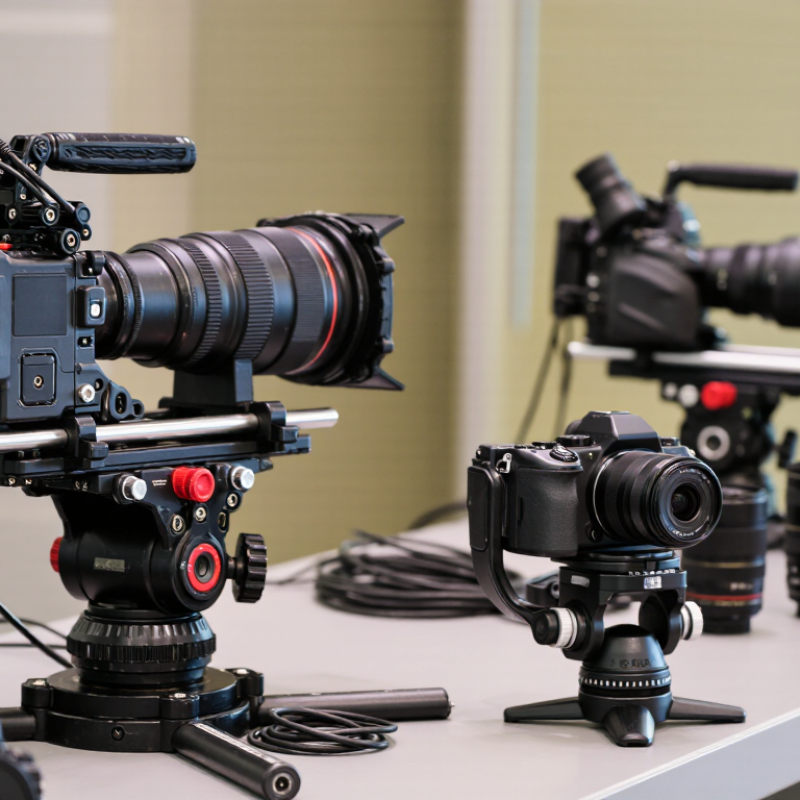
A pan tilt head turns equipment horizontally and vertically, letting an operator aim a camera, sensor, or inspection device. Manual heads use hand controls and suit simple setups. Fluid-damped models resist sudden movement, helping produce smoother camera moves. Geared heads offer fine adjustments through knobs or gear trains. Motorized heads use electric drives to move remotely or follow programmed commands.
Small details matter.
Motorized systems may use stepper or servo motors, depending on load, speed, and positioning needs. The pan axis rotates around a vertical point; the tilt axis raises or lowers the mounted equipment. Together, they provide two-axis movement, but performance depends on more than range. Check payload capacity, mounting compatibility, cable routing, movement speed, and repeatability. A heavy camera can strain a head that looks sturdy on paper.
Not always obvious.
For a practical evaluation, test the complete setup: mount the actual equipment, move across its intended angles, and watch for vibration, cable snagging, or drift. A motorized head can still overshoot, and a manual head may be steadier for slow adjustments. No single type fits every job.
How to Choose the Best Pan Tilt Head in China?
Define Your Application and Required Payload
A pan-tilt head should be selected for the task, not just its advertised load rating. For a fixed inspection camera, smooth, repeatable movement may matter more than high speed. A rooftop camera faces different demands: wind, rain, and longer viewing distances can affect stability and positioning. Small details matter.
Add the camera, lens, housing, brackets, cables, and accessories when estimating payload. Then consider where that weight sits. The actual load capacity should account for the center of gravity and mounting orientation. An off-center telephoto lens can strain the tilt axis more than a compact camera of equal weight. Leave a sensible margin, too; operating continuously at the stated limit may reduce smooth movement or leave little room for later additions.
Think about how the head will move during a normal workday. Will it make frequent small adjustments, follow a moving subject, or remain still for long periods? Check the required pan and tilt range, movement speed, duty cycle, and installation environment against the equipment specifications. It is easy to overestimate payload and overlook cable drag. I would revisit the estimate after a basic setup test, especially if cables pull as the head tilts. A little uncertainty is better than treating a single weight figure as the whole answer.
Compare the complete equipment load with a provisional head-capacity target. Include the camera, lens, brackets, cables, and any other moving accessories when calculating payload.
Illustrative planning examples, not market statistics or product specifications. The capacity target uses a 1.5× planning allowance; confirm the head’s rated payload, center-of-gravity limits, and dynamic-load requirements with its manufacturer.
How to Choose the Best Pan Tilt Head in China?
Compare motion, speed, precision, and control before choosing a pan tilt head. Check its rated payload against the full camera setup, including the lens and cables. A head that moves smoothly without a load may hesitate when fully equipped. Test the start and stop motion at low speed. Jerks can spoil a careful frame. Also compare rotation range and speed with the type of shots you plan to capture.
Tips: Ask for a repeatability test, not just a speed figure. Watch the head return to the same marked position. Check whether its control interface fits your existing system, and confirm that replacement parts and service are practical to obtain locally.
Precision depends on more than a specification sheet. Look for backlash, vibration, and drift during slow movements. If possible, test the head with your own camera and a real cable setup. Cable drag can change how movement feels. For outdoor work in China, consider dust, temperature changes, and how quickly the unit can be installed or serviced. I would not choose the fastest model by default; a small amount of speed may matter less than steady, predictable framing.
| Head Type | Motion and Typical Use | Speed Characteristics | Precision and Repeatability | Control Features | Best Suited For |
|---|---|---|---|---|---|
| Manual fluid video head | Operator-controlled pan and tilt; fluid resistance helps smooth camera movement. | Varies with the operator. Smooth starts and stops are possible, but speed is not electronically set. | Good for visually smooth framing; repeatable positioning depends on the operator and has no automatic position feedback. | Hand-operated pan and tilt locks; fluid drag may be adjustable. No motorized presets. | Video production, interviews, and general camera work where an operator is present. |
| Manual geared head | Pan and tilt are moved through mechanical gears, often using separate hand controls. | Typically slower than free-hand movement, allowing deliberate adjustments; speed depends on the gearing and operator input. | Fine manual adjustments are possible. It does not provide electronic position feedback or guaranteed repeatability. | Mechanical knobs or wheels; control is direct and does not require power. | Studio or still-camera work requiring careful, incremental framing. |
| Motorized pan-tilt head | Powered axes rotate a mounted camera horizontally and vertically; some models provide continuous rotation or defined travel limits. | Usually adjustable through a controller or software. Maximum speed and low-speed smoothness vary by model and payload. | Positioning depends on the drive, encoder or feedback system, setup, and load. Check the manufacturer’s repeatability specification. | May support wired or wireless control, adjustable speed, end limits, and preset positions; features vary by model. | Remote cameras, inspection, observation, and installations where the head is difficult to reach. |
| Robotic broadcast camera head | Designed for controlled remote movement of broadcast or studio cameras, often as part of a larger camera system. | Designed for controlled moves; available speed ranges and smoothness should be checked against the specific system specification. | System-dependent. Preset accuracy can be affected by calibration, camera payload, mounting, and mechanical backlash. | May integrate with a production control panel, camera-control system, or preset workflow; compatibility is system-specific. | Studios, lecture halls, houses of worship, and other multi-camera production environments. |
| Integrated PTZ camera mechanism | Pan, tilt, and zoom are built into a complete camera rather than supplied as a separate head. | Camera menus or control software commonly provide selectable movement speeds; zoom and movement behavior can interact. | Preset performance and positioning accuracy depend on the camera design and its control system. | May offer network or serial control, presets, and remote operation. Supported protocols and functions differ by camera. | Video conferencing, streaming, classrooms, and other installations using an all-in-one camera. |
| Comparison note: There is no single standard speed, accuracy, or payload value for each head type. Compare the exact model’s published pan and tilt speed, travel range, repeatability, rated payload, control interfaces, and preset behavior under the intended camera load. | |||||
CIPA’s 2024 digital camera shipment report recorded about 8.49 million cameras worldwide. That figure does not prove any head will fit your camera. It does show why model-specific checks matter. Match the head’s payload rating to the full rig: camera, lens, cage, cables, and accessories. A long lens can shift the balance even when the total weight seems acceptable.
Check the mounting interface, too. Confirm the camera plate uses the right screw thread, and make sure the plate does not block battery doors or cable ports. Measure the camera’s width and height against the head’s clearance. Test the tilt range with the actual lens attached. Small details matter. A cable that looks loose at rest may snag during rotation.
Power requirements deserve equal attention. Compare the head’s input voltage and current with the power supply available on set. If the head provides camera power, verify its output voltage, connector polarity, and current limit separately. Motor startup can draw more current than steady movement. Keep that in mind. Specifications are useful, but they can leave gaps; confirm unclear values with the supplier before ordering.
How to Choose the Best Pan Tilt Head in China?
Evaluate Chinese Suppliers, Quality, and After-Sales Support
A reliable supplier should explain how a pan tilt head performs under your actual camera load, not just quote its maximum capacity. Ask for the rated payload, movement range, speed, and repeatability in writing. Small details matter. Check cable routing, connector access, and whether the mounting plate fits your setup without extra machining.
Assess quality with evidence you can verify. Request inspection records and a test video showing the unit moving with a comparable load. Listen for grinding, watch for sudden stops, and check whether the head returns to the same position repeatedly. A sample can help, though one well-prepared sample does not guarantee every production batch will match. That is worth remembering.
After-sales support deserves the same scrutiny as price. Ask who handles troubleshooting, how quickly they respond, and whether they can supply replacement motors or control boards. Clarify warranty coverage, packing standards, and who pays for shipping if a unit arrives damaged. A clear answer is reassuring. Vague promises are not. Before placing a larger order, agree on acceptance checks and keep the specifications in writing; I would still leave room for one unexpected issue.
Check smooth starts, stops, rotation range, and speed. Slow movements reveal jerks that can spoil a frame.
Include the camera, lens, cage, cables, and accessories. A long lens can shift balance, even when the rig seems light.
Ask the head to return to a marked position several times. Speed figures alone do not show whether framing stays consistent.
Watch for backlash, vibration, and drift during slow moves. I might be overly cautious, but these details matter.
Check the screw thread, plate clearance, and camera dimensions. Make sure battery doors and cable ports remain accessible.
Cable drag can change movement or cause snagging during rotation. Test the full setup, not just the camera body.
Match the head’s input voltage and current to your available supply. If it powers the camera, check output voltage, polarity, and current limits.
Consider dust, temperature changes, and local service access. Confirm replacement parts are practical to obtain. Specs can leave gaps.
Choosing the best Pan Tilt Head in China begins with understanding the available types and how their movement mechanisms suit different operating environments. Define the application first, then estimate the camera and accessory payload to ensure the head can support the required weight reliably. Compare movement range, speed, positioning precision, and control options against the tasks you need to perform, whether they involve smooth tracking, repeatable positioning, or remote operation.
Before making a decision, confirm that the Pan Tilt Head is compatible with your camera, mounting arrangement, and available power supply. Also evaluate suppliers by reviewing product specifications, manufacturing consistency, testing practices, communication, and after-sales support. A careful comparison of these practical factors can help you select a solution that fits your setup and performs dependably over time.
