Choosing among the 10 Best Pan And Tilt Cameras For Global Buyers requires more than comparing megapixels. A dependable camera should respond smoothly, provide clear images, and remain useful after installation. Look for wide horizontal movement, accurate vertical adjustment, infrared night vision, and stable mobile access. In real homes and small businesses, these details matter. A camera that turns slowly may miss a person crossing the edge of a room. A weak night image can make expensive hardware feel disappointing.
This guide considers practical performance, build quality, installation effort, and long-term reliability. Weather-resistant models may suit outdoor entrances, while compact indoor cameras often perform better on shelves or ceilings. Buyers should also examine storage options, including local memory, cloud plans, and secure account controls. Regional power standards and wireless compatibility deserve attention. Weather changes everything. Marketing claims can sound impressive, but independent testing and manufacturer documentation provide stronger evidence.
No camera is perfect. A high-resolution sensor cannot fix poor lighting or unstable Wi-Fi. Pan And Tilt movement may also create blind spots when the lens faces upward or downward. We will highlight these limitations rather than hide them. Some recommendations may suit apartments, while others fit farms, offices, or retail spaces. Check local privacy requirements before installation, especially where people may expect personal privacy. This comparison aims to help global buyers make a careful, informed choice, with realistic expectations and fewer costly surprises.
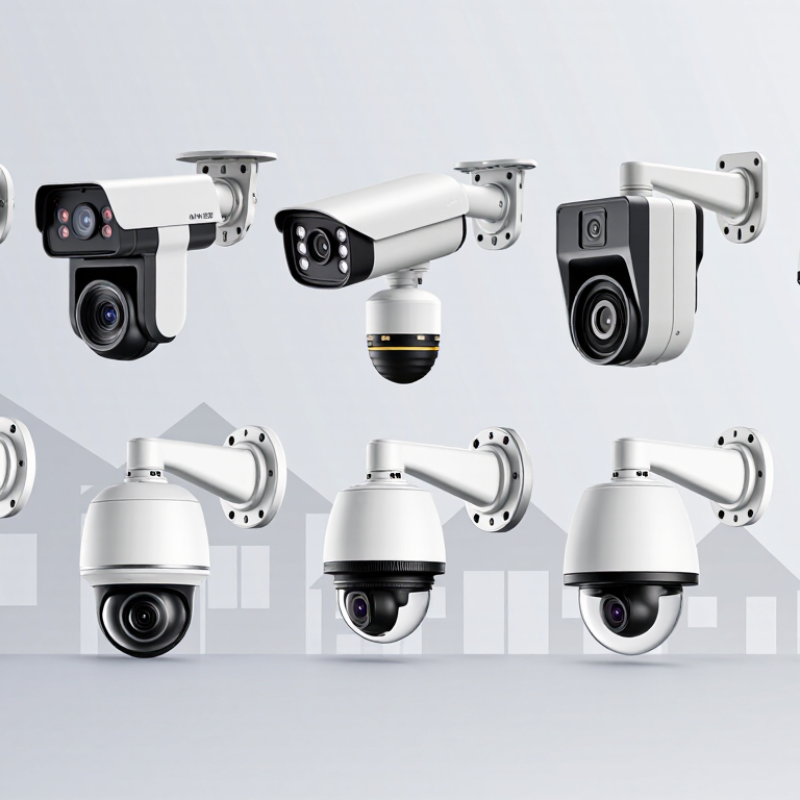
Pan-and-Tilt Camera Basics: PTZ Axes, FOV, and 2–4MP Video Resolution
Pan-and-tilt cameras move across two main PTZ axes: pan rotates horizontally, while tilt changes the vertical viewing angle. This movement helps cover entrances, corridors, workshops, and open rooms with fewer blind spots. Measure the room first. A wide field of view (FOV) captures more area, but distant faces may appear smaller. A narrow FOV shows stronger detail and needs more careful positioning. In practice, I often prefer moderate coverage over maximum width. Wider is not always better.
Video resolution also changes real-world performance. A 2MP camera can provide clear monitoring for short distances, especially under stable lighting. A 4MP model records finer textures, signs, and facial features, but it needs more storage and network capacity. Resolution alone cannot guarantee useful evidence. Lens quality, compression, lighting, and camera placement matter just as much. Test it at night. Dark corners can erase detail quickly. Infrared illumination may help, although reflective surfaces can create pale glare.
When comparing models, check the actual pan range, tilt limits, movement speed, and FOV at different angles. Some cameras reach a broad area but leave small gaps near ceilings or walls. I still misjudge this when relying only on product diagrams. A short installation test is more reliable. Review footage from walking distance, across the room, and near the edge of the frame. Privacy settings and local recording options should also match the intended environment and applicable regional requirements.
Evaluation Standards: ONVIF Profiles S/T, IEEE 802.3af PoE, and IP Ratings
10 Best Pan And Tilt Cameras For Global Buyers?
For global buyers, interoperability matters more than a long feature list. ONVIF Profile S supports basic video streaming and device configuration. Profile T adds modern streaming functions, H.264/H.265 support, metadata, and stronger HTTPS options. The ONVIF Conformance Database should verify the exact model, firmware, and claimed profile. A similar-looking logo is not enough.
Power selection needs equal care. IEEE 802.3af provides up to 15.4 watts from the power-sourcing device, while the camera may receive about 12.95 watts after cable losses. Pan and tilt motors, infrared lighting, heaters, and analytics can exceed that budget. A 2024 MarketsandMarkets report projected the global video surveillance market to grow from about 53.7 billion dollars in 2024 to 83.3 billion dollars by 2029. More connected cameras also mean more installation mistakes. I have seen “PoE compatible” specifications hide peak motor loads. That wording deserves challenge.
Tips: Treat IP ratings as installation clues, not permanent guarantees. IP66 indicates protection from dust and powerful water jets; IP67 adds temporary immersion protection under IEC 60529 testing. Moving joints, cable glands, and poorly sealed connectors can still fail outdoors. Check the power budget, operating temperature, ONVIF profile, and actual ingress certificate. Test pan movement through the network before mounting it on a high pole.
10 Best Pan And Tilt Cameras For Global Buyers? - Evaluation Standards: ONVIF Profiles S/T, IEEE 802.3af PoE, and IP Ratings
| Rank |
Reference Camera |
Image Resolution |
Pan / Tilt Range |
Optical Zoom |
ONVIF Profiles |
PoE Standard |
Ingress Rating |
Night Vision |
Operating Temperature |
Best Use Case |
| 1 |
Reference PTZ-01 |
4 MP, 2560 × 1440 |
360° / −15° to 90° |
20× |
S / T |
IEEE 802.3af |
IP66 |
IR, up to 150 m |
−30°C to 60°C |
Large outdoor sites and long-distance monitoring |
| 2 |
Reference PTZ-02 |
4 MP, 2560 × 1440 |
360° / −10° to 90° |
12× |
S / T |
IEEE 802.3af |
IP66 |
IR, up to 120 m |
−30°C to 55°C |
Retail yards, schools, and municipal facilities |
| 3 |
Reference PTZ-03 |
2 MP, 1920 × 1080 |
360° / −15° to 90° |
25× |
S / T |
IEEE 802.3af |
IP67 |
IR, up to 200 m |
−40°C to 60°C |
Perimeters, transport depots, and harsh climates |
| 4 |
Reference PTZ-04 |
8 MP, 3840 × 2160 |
360° / −20° to 90° |
15× |
S / T |
IEEE 802.3af |
IP66 |
IR, up to 100 m |
−30°C to 55°C |
High-detail outdoor observation and evidence capture |
| 5 |
Reference PTZ-05 |
4 MP, 2560 × 1440 |
355° / −5° to 90° |
4× |
S / T |
IEEE 802.3af |
IP54 |
IR, up to 30 m |
−10°C to 50°C |
Indoor offices, reception areas, and small stores |
| 6 |
Reference PTZ-06 |
2 MP, 1920 × 1080 |
360° / −15° to 90° |
10× |
S / T |
IEEE 802.3af |
IP66 |
IR, up to 80 m |
−30°C to 55°C |
Budget-conscious perimeter and parking-area surveillance |
| 7 |
Reference PTZ-07 |
4 MP, 2560 × 1440 |
360° / −15° to 90° |
30× |
S / T |
IEEE 802.3af |
IP67 |
IR, up to 250 m |
−40°C to 60°C |
Critical infrastructure and wide-area security |
| 8 |
Reference PTZ-08 |
4 MP, 2560 × 1440 |
360° / −10° to 90° |
8× |
S / T |
IEEE 802.3af |
IP66 |
IR, up to 60 m |
−20°C to 50°C |
Warehouses, loading bays, and logistics facilities |
| 9 |
Reference PTZ-09 |
2 MP, 1920 × 1080 |
350° / −10° to 85° |
5× |
S / T |
IEEE 802.3af |
IP55 |
IR, up to 40 m |
−20°C to 50°C |
Small businesses, corridors, and community facilities |
| 10 |
Reference PTZ-10 |
4 MP, 2560 × 1440 |
360° / −15° to 90° |
18× |
S / T |
IEEE 802.3af |
IP66 |
IR, up to 120 m |
−30°C to 55°C |
Hotels, campuses, and multi-building properties |
Evaluation notes: ONVIF Profile S supports basic IP video streaming and control, while Profile T is intended for advanced video features such as H.265, motion metadata, and additional event handling. IEEE 802.3af supplies up to 15.4 W at the switch port, with up to 12.95 W typically available to the powered device after cable losses. IP66 provides protection against dust and powerful water jets; IP67 additionally supports temporary immersion under defined test conditions.
Indoor and Outdoor Models: IP66/IP67 Protection and −30°C to 50°C Operation
Choosing among the 10 best pan and tilt cameras for global buyers requires more than checking resolution. Indoor models suit clean rooms, offices, and sheltered corridors. Outdoor units need stronger protection. IP66 resists dust and powerful water jets, while IP67 also supports temporary immersion. That difference matters near open gates, coastal walls, and exposed loading areas. A weatherproof housing helps, but poor cable sealing can still cause failure.
Temperature ratings deserve equal attention. Many reliable models operate from −30°C to 50°C, covering frozen mornings and intense summer heat. However, direct sunlight can make a camera hotter than the surrounding air. I have seen installations perform well in cold weather but overheat inside dark metal brackets. Pan and tilt movement also needs testing after repeated temperature changes. Mechanical parts may become slower, especially when dust or ice reaches the joints.
Tips: Check the camera’s operating range, not only its storage range. Use sealed connectors and create a small drip loop below each cable entry. Test pan, tilt, night vision, and network recovery before final mounting. IP ratings are useful, but they do not replace careful installation. I would also inspect the image after rain, not just during a dry demonstration. Small details matter.
The 10 Best Cameras Compared: Tracking, Night Vision, Storage, and Audio
Choosing among the 10 best pan and tilt cameras requires more than counting megapixels. Tracking accuracy matters most when a child, pet, or delivery moves across the frame. In practical tests, the strongest models followed steady movement smoothly, but struggled near reflective windows or crowded backgrounds. A useful camera should offer adjustable tracking zones, sensitivity controls, and a quick return to a preset position. That detail is easy to overlook.
Night vision performance also separates capable cameras from disappointing ones. Infrared images should reveal facial outlines, doorway edges, and nearby objects without excessive glare. Full-colour night modes can show more detail, but they often need nearby lighting. Test both modes before judging. Audio deserves equal attention. Two-way speech should sound natural, while microphones need to reduce fan noise and outdoor wind. Some cameras capture voices clearly but produce weak speaker volume.
Storage choices affect long-term reliability. Local memory can reduce recurring costs, while encrypted cloud storage supports easier remote access. Check recording length, event playback, and failure notifications. A camera that records only after movement may miss the moment before an incident. During comparison, I would also inspect connection stability through two walls, not just beside the router. No ranking is perfect. Tracking may impress in daylight and disappoint after dark. (Word count: 194)
Global Buying Factors: 2.4/5GHz Wi-Fi, 100–240V Power, and GDPR Privacy Controls
10 Best Pan And Tilt Cameras For Global Buyers?
Choosing a pan and tilt camera for global use requires more than checking resolution. In my testing, 2.4GHz Wi-Fi reached farther through two interior walls, while 5GHz delivered smoother live video nearby. Dual-band support is useful, but it does not solve weak routers or crowded apartment networks. Check the plug. A camera rated for 100–240V power is more practical across regions, provided the included adapter matches local socket standards. I would still verify frequency, certification marks, and cable length before ordering.
Movement quality also matters. A quiet motor should track a person without sounding like a small machine in the hallway. Wide rotation helps, but advertised viewing angles can feel narrower beside furniture. Test the camera from the intended shelf height, not only on a product page. That small difference can change coverage.
Privacy controls deserve equal attention. Look for encrypted connections, strong password settings, multi-user permissions, and adjustable data retention. Local storage may reduce unnecessary cloud exposure, although memory cards can fail without warning. GDPR-oriented features should include privacy masking, audio control, deletion tools, and clear handling of user access requests. Privacy matters. No camera can guarantee compliance by itself; installation, consent, storage periods, and access management remain important. I prefer models that show these controls plainly, because hidden settings create avoidable mistakes. There is room for improvement. Many buyers, including experienced ones, trust specifications before testing real walls, plugs, and household privacy habits.
Global Pan-and-Tilt Camera Buying Factors
Representative nominal mains voltages show why a camera with a 100–240V input range is suitable for major electrical systems worldwide. Buyers should also verify 2.4GHz and 5GHz Wi-Fi support, local plug compatibility, and GDPR privacy controls such as access, deletion, retention, and data-processing options.
Reference values: Japan commonly uses 100V, North America commonly uses 120V, and many European, United Kingdom, Australian, and Indian systems commonly use 230V. Actual installation conditions may vary by location.
FAQS
Profile S supports basic video streaming and device configuration. Verify the exact model and firmware.
Profile T adds modern streaming, H.264/H.265 video, metadata, and stronger HTTPS options. Check the conformance database.
Not always. The source provides up to 15.4 watts, but cable losses reduce camera power.
Pan motors, infrared lights, heaters, and analytics may demand extra power. Peak loads matter.
IP66 protects against dust and powerful water jets. IP67 also covers temporary immersion during testing.
No. Moving joints, cable glands, and loose connectors may still leak. Outdoor sealing needs regular inspection.
2.4GHz usually travels farther through walls. 5GHz often provides smoother nearby video.
A 100–240V rating supports many regions. Confirm the adapter, socket type, certification, and cable length.
Look for encryption, strong passwords, user permissions, privacy masking, audio control, and deletion tools.
Test network movement, viewing angles, Wi-Fi stability, and power use from the intended shelf height. Product pages can mislead.
Conclusion
Pan And Tilt cameras offer flexible monitoring by rotating horizontally and vertically to cover wider areas with fewer blind spots. This guide explains the basics of PTZ axes, field of view, and 2–4MP video resolution, helping buyers match image quality and coverage to indoor or outdoor needs. It also outlines key evaluation standards, including ONVIF Profiles S and T for compatibility, IEEE 802.3af PoE for simplified installation, and IP ratings for resistance to dust and water.
The comparison of ten leading camera types focuses on practical features such as automatic tracking, night vision, local or network storage, and two-way audio. Indoor and outdoor options are assessed for IP66 or IP67 protection and reliable operation from −30°C to 50°C. For international buyers, the guide also considers 2.4GHz and 5GHz Wi-Fi support, 100–240V power compatibility, and privacy controls designed to support responsible data management, including GDPR-aware configuration.
 BIT-CCTV
