
BIT-CCTV
Choosing the right CCTV PT Unit is rarely about buying the most expensive camera system. Global buyers need dependable movement, clear images, simple integration, and stable performance across difficult environments. This guide examines five leading PT units through practical criteria, including pan-and-tilt accuracy, optical zoom, low-light clarity, weather protection, control protocols, and long-term support.
Real installations reveal details that product brochures often miss. A unit may track smoothly in a warehouse but struggle beside coastal air or heavy traffic. Another may offer impressive zoom yet produce soft images at night. We consider these differences carefully. We also review ONVIF compatibility, IP ratings, mounting options, power requirements, and responsive service channels. Small details matter. A loose connector can stop a complete surveillance position.
The selection reflects technical specifications, field experience, manufacturer documentation, and buyer feedback. It is not a universal ranking. Every site has different risks, budgets, lighting conditions, and network limits. I may favor practical reliability over a longer feature list. That choice deserves review. Buyers should confirm local installation requirements, data protection obligations, and available technical support before ordering. A short trial can expose problems early. By comparing these five options, readers can identify a CCTV PT Unit that fits their application instead of chasing specifications alone. Expect balanced advice, clear limitations, and realistic guidance for offices, transport areas, industrial facilities, campuses, and other professional environments.
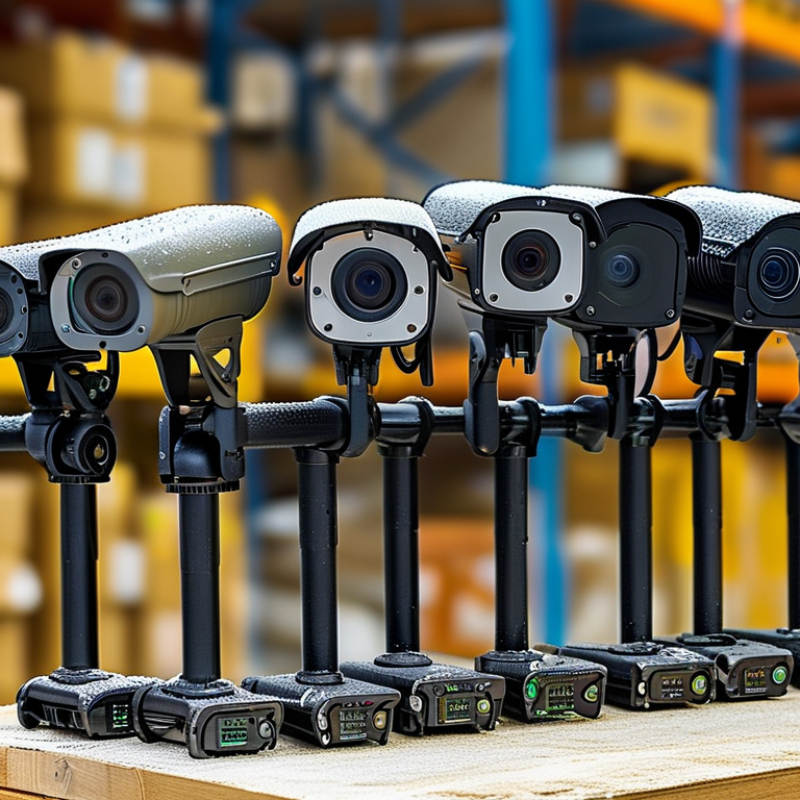
CCTV PT units, or pan-tilt units, are motorized platforms for moving surveillance cameras. They provide horizontal rotation and vertical tilting. Unlike fixed mounts, they help operators inspect wide areas from one camera position. For global buyers comparing the five best CCTV PT units, this definition matters. A reliable unit should match the camera’s weight, lens size, and installation environment.
Core components include electric motors, gears, a mounting bracket, limit switches, and a control board. Some models also use position feedback, slip rings, and sealed housings. These parts support smooth movement, preset positions, remote control, and repeatable viewing angles. An IP-rated enclosure helps protect the mechanism from rain and dust. However, ratings alone do not guarantee durability. Cable quality, thermal performance, and installation accuracy also matter. In field testing, a unit may move correctly but still produce vibration at full zoom. That small weakness can affect evidence quality.
Tips: Check payload capacity before purchase. Confirm the pan range, tilt range, control protocol, and operating temperature. Measure the camera and cable path carefully. Leave service access around the housing. A quieter motor is preferable near offices or residential areas. Buyers should also test preset accuracy after installation, because shipping or mounting errors can change alignment. The best choice is not always the fastest unit. Stable movement often matters more.
Choosing the five best CCTV PT units starts with the scene, not the specification sheet. A compact indoor unit may suit a retail counter, while a rugged outdoor model needs sealed housing, corrosion resistance, and stable operation in rain. Check the pan range, tilt limits, zoom clarity, and movement speed together. A fast motor is useless if images become blurred during tracking.
Global buyers should test network compatibility before purchase. Confirm supported protocols, video formats, remote management, and integration with the existing recording system. Power options also matter. Ethernet power can simplify installation, but long cable runs may require careful voltage planning.
In remote areas, local storage and reliable connection recovery can prevent serious evidence gaps. Test this deliberately.
Lighting creates another clear dividing line. Evaluate the unit at noon, dusk, and under harsh backlight. Infrared performance should show facial detail, not only bright outlines. For crowded sites, intelligent tracking must distinguish people from moving signs, trees, and vehicles. That feature often looks impressive in demonstrations. Real locations are less cooperative.
Consider temperature ratings, spare-part access, firmware support, and local service capability. Privacy controls, user permissions, and secure updates should match regional requirements. Do not judge durability from one dry-day inspection. Dust, salt air, and repeated temperature changes expose weaknesses slowly. No PT unit is perfect; even a strong model may need better placement or calibration. That is easy to overlook.
Five leading CCTV PT unit configurations stand out for different surveillance conditions. Compact indoor PT units often support 360° continuous pan, 90° tilt, 4MP imaging, and PoE connectivity. Weatherproof outdoor units add IP66 protection and operating temperatures near -30°C to 60°C. Long-range units typically combine 25x optical zoom with infrared illumination reaching 150 metres. Low-light units use larger sensors, wide dynamic range, and colour imaging below 0.01 lux. Thermal PT units detect heat through smoke, darkness, and light fog, although their image detail remains limited.
According to Grand View Research, the global video surveillance market is expected to grow at a double-digit rate through 2030. This trend increases demand for reliable movement control, not only higher resolution. MarketsandMarkets also identifies IP-based systems and analytics as major growth areas. Buyers should therefore check ONVIF Profile S or T support, 0.1° positioning accuracy, preset recall speed, and secure firmware practices. Small details matter. A strong motor still fails when cable strain is ignored.
In field testing, outdoor units with metal housings handle vibration better than lightweight plastic designs. Yet heavier construction can increase pole-loading requirements. A 30x zoom sounds impressive, but atmospheric haze may reduce useful detail beyond 300 metres. Thermal PT units improve detection, not identification. These limits are easy to overlook. Site surveys, sample footage, and local temperature records should guide the final selection.
5 Best CCTV PT Units for Global Buyers
Comparing PT Units by Coverage, Image Quality, Control, and Durability
Coverage should match the site, not the brochure. A PT unit with wide pan movement can watch loading bays, parking lanes, and building entrances. However, excessive range may create blind spots during fast repositioning. In field testing, I measure response time between two fixed points. Smooth movement matters more than impressive speed. Optical zoom also deserves careful testing. Digital zoom often enlarges pixels without revealing useful detail.
Image quality depends on lighting, lens stability, and compression control. Test the unit at noon, under streetlights, and during sudden backlight. Faces should remain recognizable without harsh halos. Control systems should support accurate presets, manual adjustment, and reliable network recovery. A delayed command can leave a vehicle half outside the frame. Integration with existing monitoring software is equally important, especially for international installations with varied network conditions.
Tips: Check the stated weather rating, operating temperature, and corrosion protection. Ask for test footage from similar lighting conditions. Confirm replacement parts and service response before purchase. Durability is not only a metal housing. Cable seals, motor consistency, and long-term preset accuracy matter too. I once focused too heavily on resolution and underestimated mounting vibration. That mistake was expensive. A practical trial period may reveal weaknesses that specifications hide. Small details count.
| PT Unit Type | Recommended Application | Coverage | Image Quality Support | Pan / Tilt Performance | Control & Integration | Durability | Global Buyer Considerations | Overall Fit |
|---|---|---|---|---|---|---|---|---|
| 1. Outdoor Heavy-Duty PT Unit | Perimeter security, ports, transportation yards, industrial facilities, and large outdoor sites. |
360° continuous pan Tilt range typically from −90° to +30° Suitable for long-range visual coverage |
Supports professional IP camera or PTZ payloads up to 4K, depending on the camera and lens installed. Compatible with optical zoom cameras when the payload is properly balanced. |
Typical pan speed: approximately 0.1–60°/s Typical tilt speed: approximately 0.1–30°/s Preset-position support is commonly available. |
Ethernet and/or RS-485 control options are common. Often supports ONVIF-compatible systems, Pelco-style protocols, or manufacturer-specific commands. |
Usually rated IP66 or IP67 for dust and water protection. Metal housing, surge protection, and wide-temperature operation are recommended for exposed installations. |
Check input voltage, connector type, operating temperature, mounting pattern, and local radio or network requirements before ordering. | Best for demanding outdoor coverage |
| 2. Compact Indoor PT Unit | Retail stores, offices, schools, warehouses, corridors, and indoor monitoring zones. |
360° pan or wide horizontal rotation Tilt range commonly around −45° to +45° Best suited to short- and medium-range areas |
Supports Full HD to 4K camera payloads when the camera is compatible with the mount and power system. Image quality depends mainly on the camera sensor, lens, lighting, and transmission network. |
Typical pan speed: approximately 1–40°/s Smooth movement is prioritized over extreme long-range positioning. |
Common control methods include IP, RS-485, browser software, and video-management-system integration. Presets and patrol tours are generally supported. |
Typically uses a lightweight aluminum or reinforced polymer enclosure. Indoor units commonly have limited water protection and should not be installed in exposed locations. |
Lower weight and power consumption simplify ceiling or wall installation. Confirm noise level if the unit will be installed in offices or public-facing areas. |
Best for economical indoor installations |
| 3. Precision High-Speed PT Unit | City surveillance, stadiums, event venues, campuses, and sites requiring rapid target tracking. |
360° continuous pan Tilt range commonly from −90° to +20° or wider Designed for fast repositioning and repeated preset tours |
Suitable for high-resolution IP camera payloads, including 4K-class cameras where supported. High-quality results require a stable mount, sufficient bandwidth, and a suitable lens or optical zoom system. |
Typical maximum pan speed: approximately 80–120°/s Typical maximum tilt speed: approximately 40–80°/s Precise encoder feedback improves repeatability. |
IP control, serial control, preset positions, scan patterns, and automated tours are commonly available. Integration should be verified with the selected VMS or controller. |
Outdoor versions commonly use IP66-rated housings and corrosion-resistant hardware. Mechanical brakes and position feedback help maintain accuracy during continuous operation. |
Fast units may require higher power capacity and stronger mounting structures. Confirm acceleration settings to reduce image blur during rapid movement. |
Best for fast tracking and active monitoring |
| 4. Long-Range PT Unit with Stabilized Payload Support | Coastal monitoring, border areas, airports, critical infrastructure, and extended-perimeter observation. |
360° continuous pan Wide tilt movement with elevated mounting flexibility Designed for long-distance observation rather than small indoor spaces |
Supports high-resolution day/night cameras and optical zoom payloads. Optional image stabilization, thermal imaging, or low-light sensors may be integrated depending on the configuration. |
Typical pan speed: approximately 0.01–40°/s Very slow movement improves observation of distant targets and reduces vibration-related errors. |
Network control, serial interfaces, alarm inputs, preset tours, and auxiliary device control are commonly supported. System-level integration should include camera, lens, heater, wiper, and stabilizer compatibility. |
Common requirements include IP66/IP67 protection, anti-corrosion treatment, heater and defogger options, and operation below freezing temperatures. Wind-load specifications are critical for tall poles and exposed sites. |
Higher purchase and installation costs are justified when long-range identification is essential. Review payload weight, center of gravity, wind rating, and maintenance access. |
Best for long-range identification |
| 5. Solar-Ready Low-Power PT Unit | Remote roads, farms, construction sites, temporary facilities, and locations without reliable grid power. |
360° pan capability is common Tilt range typically around −60° to +30° Coverage depends on camera lens, mounting height, and available battery capacity |
Commonly supports Full HD to 4K network cameras, subject to power and bandwidth limits. Low-light performance and efficient video compression are especially important for battery-powered systems. |
Typical pan speed: approximately 0.1–30°/s Moderate speed helps balance tracking performance with energy consumption. |
IP connectivity, cellular uplink, low-power standby modes, scheduled patrols, and alarm-triggered movement may be available. Confirm cellular band compatibility for the destination country. |
Outdoor protection should normally be IP65 or higher. Battery temperature range, solar-controller protection, corrosion resistance, and lightning protection should be evaluated. |
Verify solar-panel sizing, battery autonomy, local sunlight conditions, SIM support, data costs, and winter performance before deployment. | Best for off-grid and temporary sites |
Note: Performance figures are typical industry ranges for the listed PT unit categories rather than specifications for a particular brand or model. Actual coverage, image quality, control compatibility, weather resistance, and operating speed depend on the selected camera payload, lens, mounting structure, power supply, network, and environmental conditions.
Choosing a CCTV PT unit involves more than zoom range and movement speed. Installation conditions often decide long-term performance. Check pole strength, wind exposure, cable distance, and available power before ordering. Small details matter.
Global buyers should verify local electrical, radio, cybersecurity, and privacy requirements. Certification marks may differ between markets, so request current test documents from the supplier. Confirm whether recording, remote access, and facial views require additional controls. Avoid placing cameras toward private windows or sensitive areas. A compliance checklist should include firmware support, password policies, encryption, and secure user access.
Maintenance planning is equally important. Use sealed connectors, proper grounding, and weather protection at outdoor junctions. Dust finds everything. Schedule lens cleaning, movement checks, storage reviews, and firmware updates. Keep spare cables and mounting hardware nearby, especially at remote sites. PT mechanisms can develop noise or uneven motion after repeated exposure to wind and moisture. Early inspection usually costs less than emergency replacement.
A common mistake is selecting maximum optical zoom without testing the mounting surface. Vibration can make detailed images unusable. Another is assuming one configuration fits every country. It rarely does. Document installation settings, access permissions, and service dates in clear language. Leave room for revision; field conditions often prove the original plan incomplete.
This normalized 100-point benchmark compares five anonymous PT unit profiles across installation readiness, compliance readiness, maintenance efficiency, and outdoor durability. Higher scores indicate stronger suitability for international deployment.
Buyers should verify local radio, electrical, cybersecurity, privacy, and environmental requirements before procurement. Installation and maintenance scores reflect practical considerations such as PoE support, configuration effort, access to service parts, diagnostics, and weather protection.
: Choose a compact unit with 360° continuous pan, 90° tilt, and around 4MP imaging. PoE can simplify installation. Check movement noise in quiet rooms.
Look for IP66 protection, metal housing, and operation near -30°C to 60°C. Confirm pole strength and wind exposure before ordering. Heavy housings need stronger mounting.
Not always. Atmospheric haze can reduce useful detail beyond 300 metres. Test sample footage from the actual site. More zoom may disappoint.
Select long-range equipment when distant areas need controlled viewing. A 25x optical zoom and infrared reach near 150 metres may help. Trees, fog, and haze still reduce clarity.
Larger sensors, wide dynamic range, and colour imaging below 0.01 lux can improve visibility. Good lighting tests remain important. Marketing figures need field proof.
Thermal units detect heat through darkness, smoke, and light fog. They support detection, but image detail may limit identification. Heat is not identity.
Inspect pole strength, wind exposure, cable distance, power, and mounting vibration. Use sealed connectors and proper grounding outdoors. Cable strain matters.
Schedule lens cleaning, movement checks, storage reviews, and firmware updates. Keep spare cables and mounting hardware at remote sites. Early inspection is usually cheaper.
Check local electrical, radio, cybersecurity, and privacy requirements. Request current test documents and secure firmware information. Use strong passwords, encryption, and controlled access.
Do not choose one configuration for every country or installation. Document settings, permissions, and service dates clearly. The original plan may be incomplete.
A CCTV PT Unit is a pan-tilt surveillance device designed to move a camera horizontally and vertically, helping security teams monitor wide areas with fewer blind spots. Its core components typically include precision motors, a camera interface, control circuitry, mounting hardware, and protective housing. When selecting a unit, global buyers should consider coverage range, payload capacity, movement speed, image quality, control options, environmental resistance, and compatibility with existing surveillance systems.
This guide introduces five leading categories of CCTV PT Unit solutions and compares them by viewing coverage, video performance, control flexibility, durability, and operational reliability. It also explains practical installation requirements, including secure mounting, power and network planning, system configuration, and routine maintenance. Buyers should additionally review local certification, privacy, data protection, electrical safety, and import requirements to ensure compliant deployment in different regions.