 BIT-CCTV
Choosing the 2026 best Radar Rotator requires more than comparing prices, rotation speed, or attractive product photos. Global buyers need dependable movement, stable mounting, and clear technical documentation. A rotator may turn smoothly in a showroom yet struggle under coastal wind, freezing temperatures, or continuous outdoor operation. Real performance matters.
This guide examines practical factors that affect international purchasing decisions. These include load capacity, rotation range, positional accuracy, drive noise, control compatibility, weather protection, and power requirements. Buyers should check voltage options carefully. A model designed for one market may need a different power configuration elsewhere. Installation manuals, spare-part access, warranty terms, and responsive technical support also deserve close attention.
Small details can reveal product quality.
For example, sealed bearings, corrosion-resistant fasteners, and reinforced cable entries may reduce maintenance problems. However, specifications do not tell the entire story. Some manufacturers list impressive figures without explaining testing conditions or expected service life. That deserves caution. An experienced buyer should request test records, dimensional drawings, certification details, and a clear explanation of limitations before placing an order. Field experience is useful, but it can also be biased by climate, installation quality, and usage patterns.
This overview aims to provide a balanced framework for comparing Radar Rotator solutions in 2026. It does not assume one product fits every region or application. Instead, it considers reliability, compatibility, supplier credibility, and long-term operating value. The strongest choice may not be the cheapest or fastest model. It may be the one that works quietly, consistently, and predictably after installation.
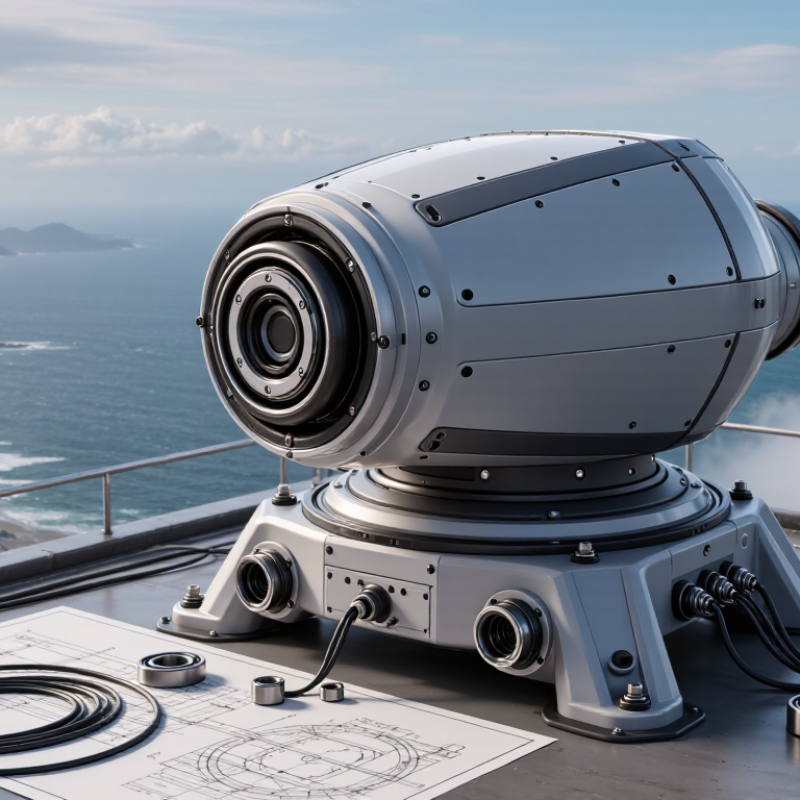
Radar rotators convert a fixed antenna into a controlled scanning platform. Their core promise is simple: 360° azimuth coverage with repeatable positioning. In practice, 0.1° positioning refers to command or encoder resolution, not guaranteed real-world accuracy. Backlash, wind load, vibration, and cable drag can shift the antenna several tenths of a degree. That distinction matters.
A professional selection process should examine encoder accuracy, torque margin, rotational speed, and continuous-operation limits. IEC 62388 defines performance requirements for marine radar equipment, while IEC 60529 helps buyers compare enclosure protection against dust and water. These standards do not certify every rotator. They provide useful checkpoints. MarketsandMarkets’ 2024 Radar Market report estimates the sector will grow from about USD 37.5 billion in 2024 to USD 54.2 billion by 2029. That growth increases demand for dependable mechanical integration, not just impressive specifications.
Ask for measured data. Request repeatability tests across a full 360° sweep, including loaded and unloaded conditions. Check whether 0.1° means resolution, accuracy, or repeatability. They are different. Also inspect emergency stop behavior, corrosion protection, bearing life, and service access. A rotator may reach 0.1° on a bench, then perform differently on a tower. That assumption is imperfect. Field verification remains essential. Temperature changes can expose weaknesses that laboratory testing misses.
A practical comparison of radar-rotator configurations based on commonly specified engineering requirements for surveillance, marine, security, and test-system applications.
| Configuration / Use Case | Azimuth Coverage | Typical Positioning Accuracy | Typical Rotation Speed | Continuous Rotation | Typical Payload Range | Environmental Design Considerations | Best-Fit Buyer Requirement |
|---|---|---|---|---|---|---|---|
| Compact Indoor Test Rotator | 360° continuous | ±0.1° to ±0.25° | 1 to 30 rpm | Yes, with slip-ring integration | 5 to 25 kg | Controlled temperature; low dust and moisture exposure; benchtop mounting | Laboratory testing, antenna characterization, and repeatable angular positioning |
| Fixed-Site Security Radar Rotator | 360° continuous | ±0.1° to ±0.3° | 0.5 to 12 rpm | Yes | 20 to 100 kg | Weatherproof enclosure, corrosion-resistant hardware, vibration control, and remote health monitoring | Perimeter monitoring and continuous area surveillance |
| Marine Navigation Rotator | 360° continuous | Typically ±0.2° to ±0.5° | 12 to 48 rpm | Yes | 10 to 60 kg | Salt-mist resistance, sealed bearings, shock and vibration tolerance, and marine-grade cabling | Fast refresh of surrounding targets on moving vessels |
| Long-Range Surveillance Rotator | 360° continuous | ±0.1° to ±0.25° | 0.25 to 6 rpm | Yes | 50 to 250 kg | High structural stiffness, low backlash, wind-load resistance, thermal management, and redundant feedback | Large radar or sensor payloads requiring stable long-duration operation |
| Mobile Platform Rotator | 360° continuous or indexed | ±0.2° to ±0.5° | 1 to 20 rpm | Usually yes | 10 to 80 kg | Compact construction, low power consumption, shock resistance, quick installation, and connector retention | Vehicle-mounted, trailer-mounted, or rapidly deployable systems |
| Heavy-Duty Coastal or Offshore Rotator | 360° continuous | ±0.1° to ±0.3° | 0.1 to 4 rpm | Yes | 100 to 500 kg | High IP-rated protection, anti-corrosion treatment, wind-load analysis, sealed drive train, and service access | High-payload radar installations in harsh coastal or offshore environments |
| Precision Tracking Rotator | 360° continuous | ±0.05° to ±0.1° | 0.05 to 10 rpm | Yes | 10 to 80 kg | High-resolution encoder, servo control, minimized mechanical backlash, and calibrated position feedback | Target tracking, instrumentation, and applications where 0.1° positioning is essential |
Selection note The figures above are representative engineering ranges rather than a specification for one particular product. Actual performance depends on payload mass, center of gravity, wind load, encoder resolution, gearbox backlash, foundation stiffness, control-loop tuning, and environmental conditions.
Key takeaway For global buyers prioritizing 360° azimuth coverage and 0.1° positioning, the most important evaluation points are continuous-rotation capability, closed-loop position feedback, mechanical backlash, rated payload at the required speed, environmental protection, and compatibility with the radar’s power and data interfaces.
Choose a rotator tested across 1–40 GHz, not only at its highest rating. That matters. Performance may weaken near 1 GHz or 40 GHz.
Request insertion loss, isolation, phase repeatability, power handling, and electromagnetic compatibility data. Ask for results at 1, 4, 8, 12, 18, 27, and 40 GHz. One typical value is not enough.
Select the interface that matches the radar band and antenna system. Use calibrated adapters and request documented measurement uncertainty. Connector loss becomes more serious at higher frequencies.
Weather sealing helps prevent dust and water from damaging the mechanism. An IP rating alone does not prove stable RF performance after temperature cycling. Check corrosion resistance, cable entries, and temperature limits.
Check load capacity, wind area, center of gravity, cable tension, and rotor backlash. A heavy reflector can overload a unit during strong winds. Angular error changes beam pointing.
Compare speed under full load, not unloaded speed. Review acceleration, stopping behavior, vibration, and control smoothness. Fast is not always better.
It suggests continuous operation, but only under stated temperature and load conditions. Ask for tests during hot sunlight and low-temperature starts. Cooling still matters.
No. MTBF is a statistical estimate, not a promised lifespan. Compare test hours, bearings, seals, maintenance intervals, and operating conditions. My comparison may still be imperfect. Field results can differ.
Request technical files, conformity declarations, laboratory reports, enclosure test conditions, and user instructions. Recheck the complete assembled system after installation. A clean datasheet is weak evidence.
Choosing the best Radar Rotator for global buyers requires balancing precision, compatibility, durability, and long-term operating value. A reliable system should provide full 360° azimuth coverage with positioning accuracy as fine as 0.1°, while supporting radar applications across L–Ka frequency bands from 1 to 40 GHz. Buyers should also confirm mechanical and electrical compatibility with their antenna, control system, and installation environment.
Environmental performance is equally important. IP65 protection can help shield equipment from dust and water jets, while MIL-STD-810H testing indicates evaluation under demanding conditions such as vibration, temperature changes, and humidity. For international deployment, compliance with CE, FCC, and IEC 60529 requirements should be reviewed alongside documentation and regional installation rules. A practical comparison should include load capacity, rotation speed, duty cycle, and mean time between failures (MTBF), enabling buyers to select a rotator that offers dependable performance, manageable maintenance, and suitable lifecycle value.
